


Pages in this Folder:

Related Folders:
See also Department Site Map
Publications:
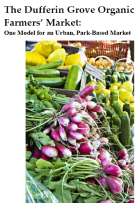
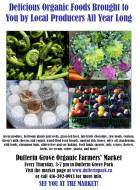
2009 market poster
Market-related videos

Chef Kennedy & Chef Vivian visit
the Dufferin Grove Farmers Market
Comments?
For the basics, see
- Website & Privacy Policies
- How To Get Involved
- The Role of the Park
Search options:
Department Site Map
Custodians:
 Printer friendly version
Food News 2010
Printer friendly version
Food News 2010
Food News 2010
posted on January 18, 2011
Wikileaks cable reveals U.S. conspired to retaliate against European nations if they resisted GMOs
By: Mike Adams
Published: December 2010
Source: NaturalNews(NaturalNews) Wikileaks continues to rock the political world by shedding light on conspiracies, corruption and cover-ups. The latest batch of diplomatic cables released by Wikileaks reveals what can only be characterized as a U.S.-led conspiracy to force GMOs onto European countries by making those countries pay a steep price if they resist.
posted on November 08, 2010
NY restaurants argue their grade at Night Court
By: Doug Powell
Published: 13.oct.10
Source: barfbloghttp://www.barfblog.com/blog/144539/10/10/13/ny-restaurants-argue-their-grade-night-court
The health department tribunal is, according to the New York Times, a little-publicized court system that metes out penalties for violations of the city sanitary code.
It has been there for years, in a nondescript government office in Lower Manhattan where more than a dozen administrative law judges escort their charges into cramped rooms and hear them wrangle over infractions, in a ritual reminiscent of visiting the principal’s office.
posted on November 08, 2010
How Mennonites Are Modernizing a Local Food Economy
By: Colleen Kimmett
Published: 28 October 2010
Source: TheTyee.caView full article and comments: http://thetyee.ca/News/2010/10/28/MennonitesModernize/
It would seem at first glance, driving down Highway 22 in Woolwich County, Ontario, that the family farm is alive and well. The two-lane rural road is flanked by tall corn fields, large barns and well-kept houses. Produce stands appear at regular intervals at the end of long laneways, advertising sweet corn, carrots, pies, blueberries, pickles. At the bottom of each, a notice to customers: No Sunday Sales.
Sunday is still a day of rest for the Old Order Mennonites who live in the area, and farming is still a way of life. But while the old traditions remain (some farmers use tractors, but no other motorized vehicles) global forces have changed things. When the BSE crisis led to an international trade ban on Canadian beef, many in this large beef-producing region were hit hard. Looking closer at the large livestock barns in the distance, it's possible to see that many are actually empty.
posted on October 14, 2010
Wal-Mart talk raises food safety supply concern
Published: 13.oct.10
Source: Business ReportEcowise, a hygiene and sanitation company servicing the food sector, said there had been increased speculation that as part of its aggressive pricing techniques Wal-Mart would make use of its global food importing network to import cheaper food products into South Africa, rather than source from local producers.
Gareth Lloyd-Jones, managing director of Ecowize, said there had been growing international concern regarding the safety of imported food products.
"As the distance that food has to travel to reach the end-consumer lengthens and the number of stakeholders in the supply chain increases, the risk of contamination multiplies exponentially," said Lloyd-Jones.
Research published in Food Review in September and October, by Chris Griffiths, Professor of Microbiology at the University of Wales, warned that any producer whose product had a shelf life of longer than five days should consider the risks associated with the bacteria, such as the prevalence of Listeria.
posted on August 18, 2010
U.S. Judge Bans Planting Of Genetically Engineered Beets
By: Dan Levine
Published: 16-Aug-10
Source: reutersA federal judge on Friday banned the planting of genetically modified sugar beets engineered by Monsanto Co in a ruling that marks a major setback for the biotech giant.
U.S. District Judge Jeffrey White ruled in 2009 that the U.S. Department of Agriculture had approved Monsanto's genetically modified sugar beets without adequate environmental study.
Sugar beets account for over half of the nation's sugar supply. But conventional sugar beet seeds remain widely available and environmentalists filing suit said the judge's decision should not significantly affect sugar production.
White's decision on Friday to impose the ban did not apply to crops already planted or harvested. It stems from a lawsuit brought by environmentalists over Monsanto sugar beets engineered to be resistant to the weed-killer Roundup.
posted on July 19, 2010
Homemade foods for sale? 2 bills to OK it today
By: CHRISTINA HALL
Published: July 12, 2010
Source: FREE PRESS STAFF WRITER
Do you get raving reviews from teachers and other parents about that homemade cake you provided for the school bake sale?
Are family and friends who have tasted your raspberry jam always asking when you are going to make some more?
You might want to consider selling your homemade goods for profit.
This afternoon, Gov. Jennifer Granholm is to sign into law two cottage food operation bills that will allow individuals to make or package certain foods in their kitchens instead of having to use a commercial food operation as they do now.
posted on June 28, 2010
Milk: Processed to Death?
The U.S. dairy industry is pasteurizing the life out of the milk supply, says one engineer turned 'dairy evangelist.' Could Snowville Creamery's minimal processing approach hold the key to reversing the white stuff's 30-year market decline?
By: Bob Sperber
Published: 05/21/2010
Source: www.foodprocessing.comYou wouldn't drop an extra couple ounces of breakfast cereal into each box just to make sure you meet the minimum package weight. You wouldn't set a filler to give away six extra ounces of milk with every gallon. So why are dairy plants pasteurizing milk far in excess of sterilization requirements, in the process wasting energy and degrading the taste of the finished product?
So asks Warren Taylor, a process engineer turned self-proclaimed "dairy evangelist" preaching the gospel of minimal processing. His small Snowville Creamery in Pomeroy, Ohio, pasteurizes milk at 165°F for less than 20 seconds, far below what conventional dairies do but safely above the FDA's Grade A Pasteurized Milk Ordinance (PMO) minimum requirement of 161°F for 15 seconds.
Why?
posted on June 24, 2010
CANADA: Here we go again
The current policy on “Product of Canada” labelling needs reform
By: Ronald Doering
Published: 01.jun.10
The new “Product of Canada” guidelines came into effect on Dec. 31, 2008, and were published as the new paragraph 4.19 in the Guide to Food Labelling: “a food product may claim ‘Product of Canada’ when all or virtually all major ingredients, processing and labour used to make the food product are Canadian.” The Guide defines the standard as 98 per cent.
It became clear within a matter of months that the standard was too restrictive and that the former producer and processor consensus of 85 per cent would be more workable.
At a meeting of more than 50 representatives of the Canadian food processing industry on April 19, 2010, Minister of State for Agriculture the Honourable Jean-Pierre Blackburn announced new consultations on the issue, but limited the exercise to a consideration of “exempting specific ingredients which are difficult to source in Canada,” such as sugar, vinegar and salt.
posted on June 12, 2010
Young Food Entrepreneurs Make Their Future by Hand
By: JULIA MOSKIN
Published: June 1, 2010
Source: New York TimesTHEY carry home-grown radishes and red-cooked pork. They transport dozens of empanadas, juggling sheet pans on the G train. They pack boxes of butterscotch cupcakes, Sichuan-spiced beef jerky and grapefruit marmalade. They haul boiled peanuts, ice-grinding machines, sandwich presses and at least one toaster oven painted hot pink.
One Saturday morning each month, the vendors of the Greenpoint Food Market converge on the Church of the Messiah in Brooklyn.
posted on March 18, 2010
The Femivore’s Dilemma
By: PEGGY ORENSTEIN
Published: March 14, 2010
Source: New York TimesFour women I know — none of whom know one another — are building chicken coops in their backyards. It goes without saying that they already raise organic produce: my town, Berkeley, Calif., is the Vatican of locavorism, the high church of Alice Waters. Kitchen gardens are as much a given here as indoor plumbing. But chickens? That ups the ante. Apparently it is no longer enough to know the name of the farm your eggs came from; now you need to know the name of the actual bird.
All of these gals — these chicks with chicks — are stay-at-home moms, highly educated women who left the work force to care for kith and kin. I don’t think that’s a coincidence: the omnivore’s dilemma has provided an unexpected out from the feminist predicament, a way for women to embrace homemaking without becoming Betty Draper. “Prior to this, I felt like my choices were either to break the glass ceiling or to accept the gilded cage,” says Shannon Hayes, a grass-fed-livestock farmer in upstate New York and author of “Radical Homemakers,” a manifesto for “tomato-canning feminists,” which was published last month.
posted on February 27, 2010
Organic trade fair puts focus on Fairtrade
By: Andy Valvur
Published: 25.02.2010
Source: www.dw-world.deMore than 45,000 people visited the World Organic Trade Fair in the southern German city of Nuremberg this year to stroll past booths displaying everything from organic wine to hammocks and t-shirts made from organic cotton.
posted on January 24, 2010
The ethics of organic farming
By: Stephen B. Scharper
Published: January 22, 2010
Source: The StarDo organic farms, and the organic food industry in general, represent a distinctive social and environmental approach to agriculture? Do they incorporate a unique set of ecological and spiritual values, or merely reflect, on a smaller scale, the same dog-eat-dog, "survival of the fittest" approach of their behemoth agribusiness cousins?
These are questions that will be seeded Jan. 28-31 at the 29th annual Guelph Organics Conference (www.guelphorganicconf.ca), one of the largest such gatherings in North America. There, CEOs of multi-million-dollar organic food companies will share food and reflection with small-scale local organic farmers in a harvesting of concerns and ideas, as the organic food business, once perceived as a hippie-esque pastime for "granola-crunching" bohemians, has grown into a burgeoning multi-billion-dollar industry.